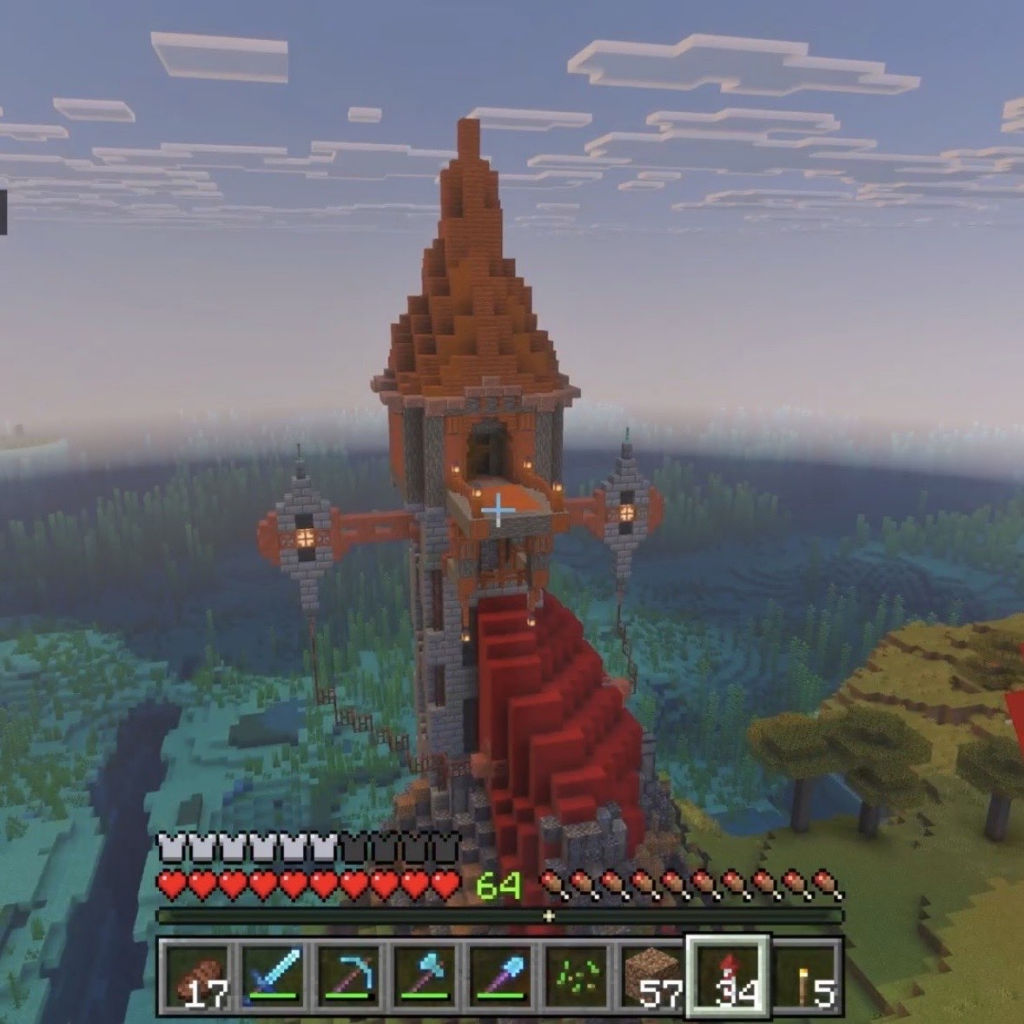
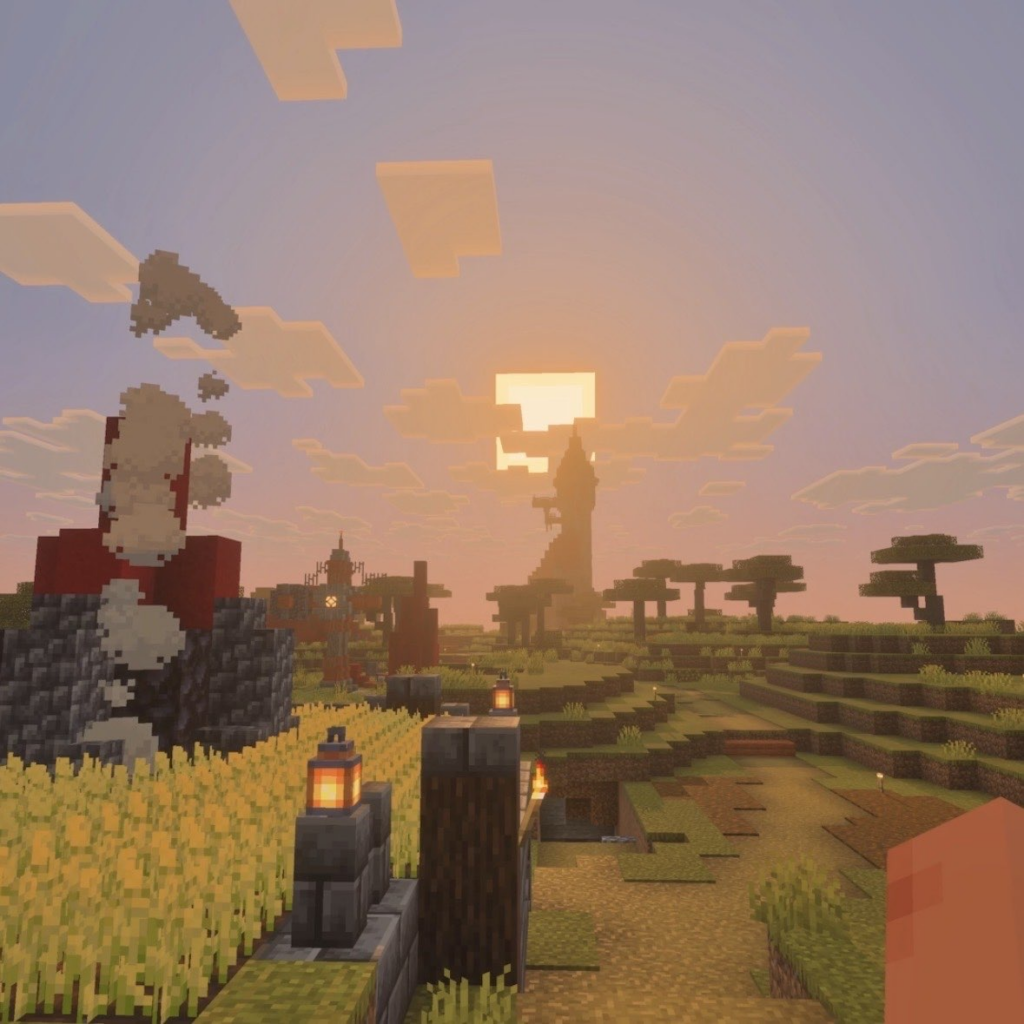
They name it the Cauterion in the older tongues—though no two records agree on who first spoke the word aloud. Some say it was not a name given, but a name earned.
In the days after the Shardfall, when the earth split and ember-glass spears tore upward from the deep, the builders’ warnings were finally understood. The stone beneath the world was never meant to be harvested. It was meant to be guided. What could not be removed had to be bound. What could not be quenched had to be tempered.
So a tower was raised beside the largest of the living shards, its foundations sunk into fractured ground and its crown set where the heat burned cleanest. Not to smother the Emberstone—but to focus it. To draw its fury into a single, steady breath. Where once the shard spat ruin, now it fed the spire. Where once it split the land, now it sealed it.
Thus the structure came to be known as the Cauterion—
the place where flame closes wounds.
the pillar that burns so the world may mend.
Travelers speak of its summit in hushed tones. Those who stand within its crown feel warmth that does not scorch and light that does not blind. Scars ease. Weariness lifts. The fire there does not consume—it restores, as if the land itself exhales through stone and sky.
Yet the name remains a warning as much as a title. For the Cauterion is not a monument to wisdom, but to correction. It stands because the warnings were ignored. It endures because the lesson was learned too late to prevent the wound—only soon enough to seal it.
And so the ancient texts close with a single line beneath its entry:
When the earth bleeds fire, build not to conquer it—
build to bind it, lest the world require cauterizing again.